19 Oct 2026
Uncovering Connections Between Sequential Events and Strategic Outcomes in Business Operations
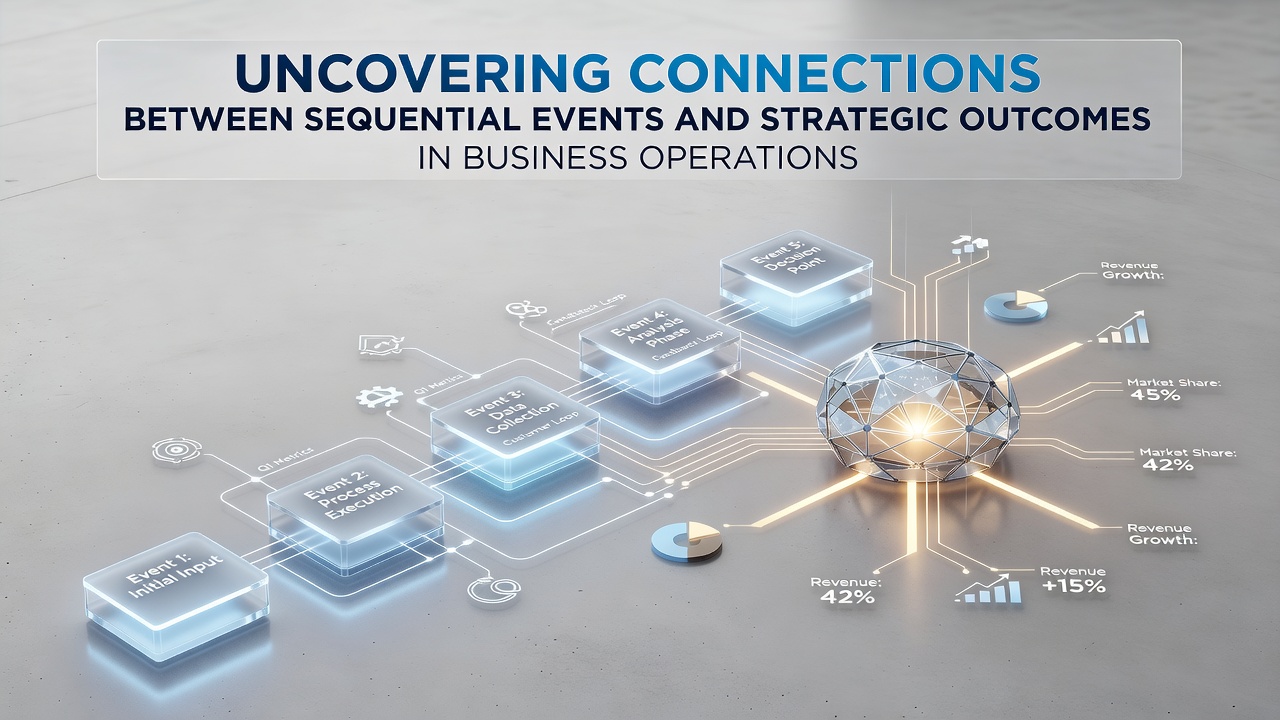
Sequential events in business operations often form patterns that shape long-term results, and organizations track these chains through structured data collection to identify how early actions influence later performance metrics. Researchers in operations management examine timelines of customer interactions, supply movements, and production steps because these sequences provide measurable indicators of efficiency and resource allocation. Data from various sectors shows that companies mapping event sequences achieve clearer visibility into cost drivers and delivery timelines, particularly when systems integrate real-time inputs from multiple departments.
Defining Sequential Events in Operational Contexts
Sequential events consist of ordered occurrences such as order placement followed by inventory checks, shipping confirmations, and payment processing, each step generating records that feed into broader performance evaluations. Observers note that these chains appear across industries including manufacturing where raw material arrivals precede assembly phases and quality inspections. Studies from academic institutions reveal that documenting these sequences allows teams to calculate cycle times and pinpoint delays, with figures from the OECD indicating average reductions in processing variances when sequence mapping is applied consistently. The process involves logging timestamps and dependencies so that analysts can reconstruct full pathways from initiation to completion without relying on isolated snapshots.
Linking Sequences to Strategic Outcomes
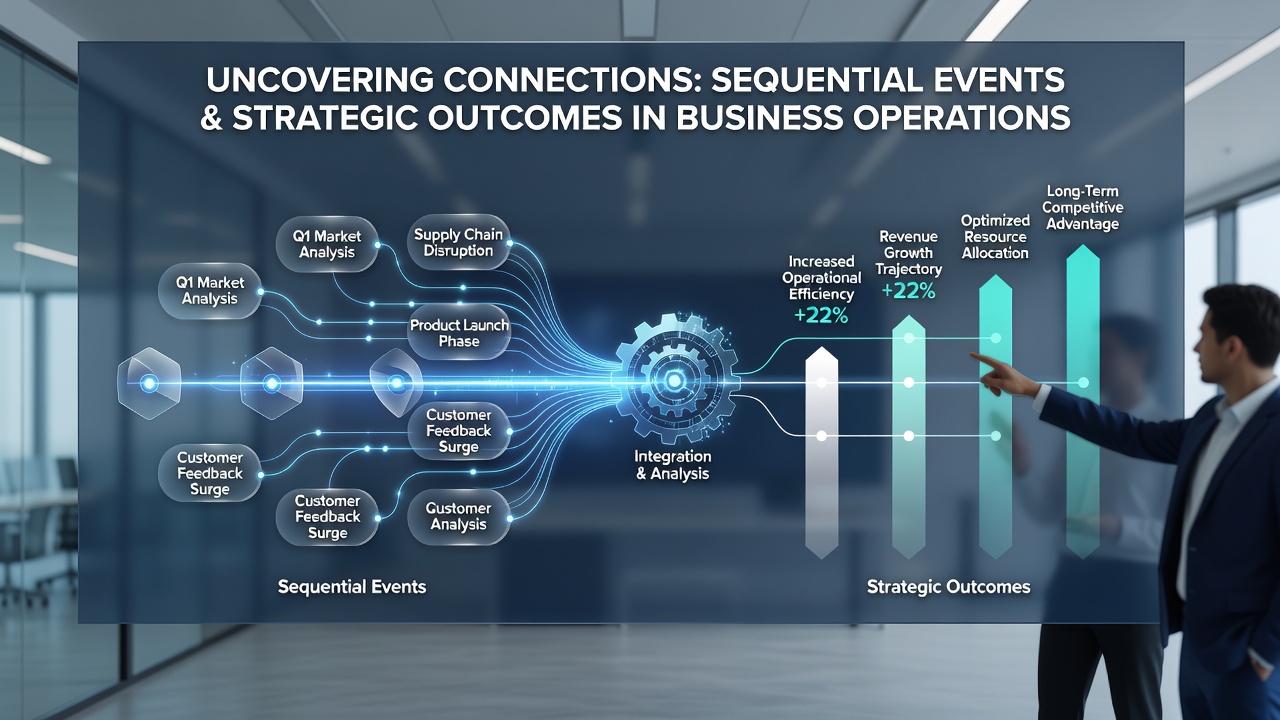
Strategic outcomes emerge when repeated sequences align with goals such as revenue growth or market expansion, and analysts use correlation techniques to connect early triggers like supplier negotiations to downstream results including market share gains. Evidence from industry reports demonstrates that firms analyzing these connections adjust procurement strategies based on historical event clusters, leading to documented improvements in forecast accuracy. Those who study business systems find that sequence analysis highlights causal pathways, for instance showing how a delay in one production stage cascades into inventory shortages and subsequent pricing adjustments. Data indicates that organizations applying these methods report tighter alignment between operational metrics and executive targets across quarterly reviews.
Analytical Approaches and Tools
Analysts employ sequence mining algorithms to process large datasets of operational records, identifying frequent patterns such as repeated combinations of marketing campaigns followed by sales spikes. These tools draw from established statistical methods including Markov chains and association rule learning, which process event logs to generate probability estimates for future occurrences. Research indicates that integration with enterprise resource planning systems enhances the precision of these models by incorporating variables like staffing levels and equipment uptime. Australian Bureau of Statistics publications on business productivity highlight how sequence-based metrics correlate with overall output measures in sectors tracked over multiple years. Teams apply visualization software to display event flows as diagrams, allowing decision makers to review pathways and test hypothetical adjustments without disrupting live operations.
Examples from Retail and Manufacturing
In retail environments, sequences begin with online browsing records that lead to cart additions, abandoned sessions, and eventual purchases, and organizations analyze these paths to refine recommendation engines and inventory restocking schedules. One documented case involved a chain adjusting its promotional timing after sequence data showed that email campaigns three days after stock arrivals produced higher conversion rates than immediate follow-ups. Manufacturing operations track sequences from material receipt through fabrication, testing, and distribution, where pattern analysis has supported adjustments in maintenance schedules that reduce unplanned downtime according to aggregated performance figures. Observers in these fields report that combining sequence data with external market indicators creates more robust projections for capacity planning and supplier contracts.
Developments Anticipated by October 2026
By October 2026, updates to data integration platforms are expected to incorporate enhanced sequence detection capabilities that handle higher volumes of IoT inputs from connected equipment, enabling finer-grained tracking of operational events. Industry conferences scheduled for that period will feature sessions on combining sequence analytics with emerging regulatory requirements for supply chain transparency in multiple jurisdictions. Reports from research bodies project continued growth in adoption rates for these analytical techniques, particularly among mid-sized enterprises seeking to link daily activities more directly to annual performance targets. Such advancements build on existing frameworks without requiring complete overhauls of current data infrastructures.
Conclusion
Connections between sequential events and strategic outcomes rest on systematic collection and analysis of operational records that reveal how individual steps accumulate into measurable results. Organizations that maintain detailed event logs and apply appropriate analytical methods gain access to patterns that inform resource decisions and performance tracking. Continued refinement of these approaches, supported by data from sources such as government statistical agencies and academic studies, sustains their relevance across evolving business environments.